C-51– a hamfisted mess

Ah, our lovely federal government and its typically clumsy legislation, drafted perhaps with the good of the nation in mind, but invariably filled with enough ideological ballast and constitutional holes that it floats like the Titanic.

This month’s example is Bill C-51: Anti-terrorism Act, 2015An Act to enact the Security of Canada Information Sharing Act and the Secure Air Travel Act, to amend the Criminal Code, the Canadian Security Intelligence Service Act and the Immigration and Refugee Protection Act and to make related and consequential amendments to other Acts. (Whew!) Continue reading “C-51– a hamfisted mess”

Council at the movies

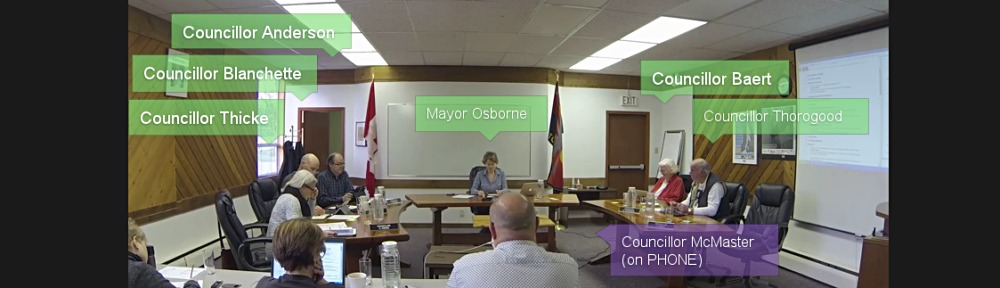
Thanks to a volunteer initiative by Citizen V (for “Video” — anonymity requested for now), we’re exploring the subject of presenting council meetings via YouTube. It’s an experiment, V says, “to help improve community engagement.”

The timing of council meetings — 10 a.m., 2nd and 4th Tuesdays of the month — is not the best for working folks. (We tried evenings in the past, and attendance was even lower.) So now anybody can dial in after the fact, to see and hear the discussions.

Three council meetings are up so far. Here are the links, with their hot issues: Continue reading “Council at the movies”

Returning to Spirit

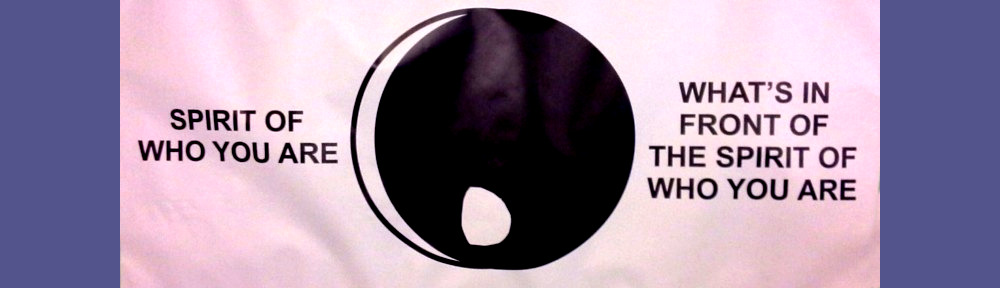
I just finished up a four-day reconciliation workshop called Returning to Spirit. It was an interesting personal and cross-cultural experience that i will be processing for days and weeks to come.

In attendance were “leaders” from both Tla-o-qui-aht and Tofino communities. (I put “leaders” in quotes because i see everyone as both leader and follower; there’s no fixed contingent to which either word applies.)

I expressed interest in the workshop weeks ago, but only fluked into it at the last minute because somebody got suddenly sick. Maybe i was meant to be there. Continue reading “Returning to Spirit”

Parsing the 2014 Tofino election

Here’s a look at Tofino’s municipal election results, based on the official figures.

One necessary distinction to make is between “ballots” (the physical piece of paper), and “votes” (the X’s made on the ballot, of which each voter could make up to six). Here’s how it washed out:
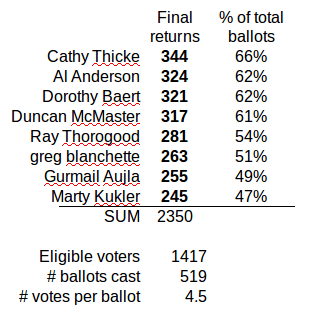
2014 Tofino election results

The first interesting factoid is that, on the 519 ballots filled out, exactly 2,350 votes were cast. This means that each voter, on average, cast 4.5 votes (made 4.5 X’s on their ballot). Clearly most people voted strategically, making fewer that six X’s so the votes they did cast would carry more weight.

Of all ballots cast, Cathy got a vote on 66% of them — a pretty resounding endorsement in any democratic process. The numbers fall accordingly, down to me, who received a vote on just 51% of ballots cast — enough, but hardly a ringing endorsement. I hope i can up that public confidence in the coming four years.

As you see, i snuck into the basement by just 8 votes. And it was a span of just 18 votes between the three lowest candidates — the results could very easily have been different. So after the election, every time somebody said “I voted for you,” my response was, “You’re the one who put me over the top.”

In the big picture, our voter turnout was a meagre 37% (in 2011 it was 56% and in 2008 it was 48%). This is based on the 1,417 “eligible voters” reckoned to be in the district on two weeks before election day, 15 Nov. But i’m not sure how much confidence i have in that number. Nobody actually went around and counted; it’s an extrapolation from the voters list, the census figures and i’m not sure what else.

But we’re a highly mobile town: how many of those 1,417 were simply not here? And property owners are entitled to a vote too, if they register — and we have a huge number of out-of-town property owners. How were they counted?

So maybe our actual voter turnout was not as low as we think. But we’ll likely never know for sure.

[Posted 20-Jan-2015, but back-dated to just after the election.]

Bohemianism

From Wikipedia:

Bohemianism is the practice of an unconventional lifestyle, often in the company of like-minded people, with few permanent ties, involving musical, artistic, or literary pursuits. In this context, Bohemians may be wanderers, adventurers, or vagabonds.

This use of the word bohemian first appeared in the English language in the nineteenth century[1] to describe the non-traditional lifestyles of marginalized and impoverished artists, writers, journalists, musicians, and actors in major European cities. Bohemians were associated with unorthodox or anti-establishment political or social viewpoints, which often were expressed through free love, frugality, and—in some cases—voluntary poverty. A wealthy and privileged, even aristocratic, bohemian circle is sometimes referred to as the haute bohème[2] (“high bohemians”).[3]

The term Bohemianism emerged in France in the early nineteenth century when artists and creators began to concentrate in the lower-rent, lower class, gypsy neighborhoods. Bohémien was a common term for the Romani people of France, who had reached Western Europe via Bohemia.[4]

[Full article]